

Painful or overwhelming experiences can continue to affect how you feel long after they are over. You may find yourself feeling anxious, on edge, stuck in old patterns, or reacting strongly to situations that remind you of the past.
EMDR (Eye Movement Desensitization and Reprocessing) is a trauma-focused therapy that can help you process these experiences so they feel less distressing and have less influence over your life today. EMDR can be helpful not only for trauma, but also for anxiety, depression, gri negative beliefs about yourself, and other difficulties connected to past experiences.

EMDR Therapy
A PATH TOWARD HEALING AND CHANGE
How Does EMDR work?
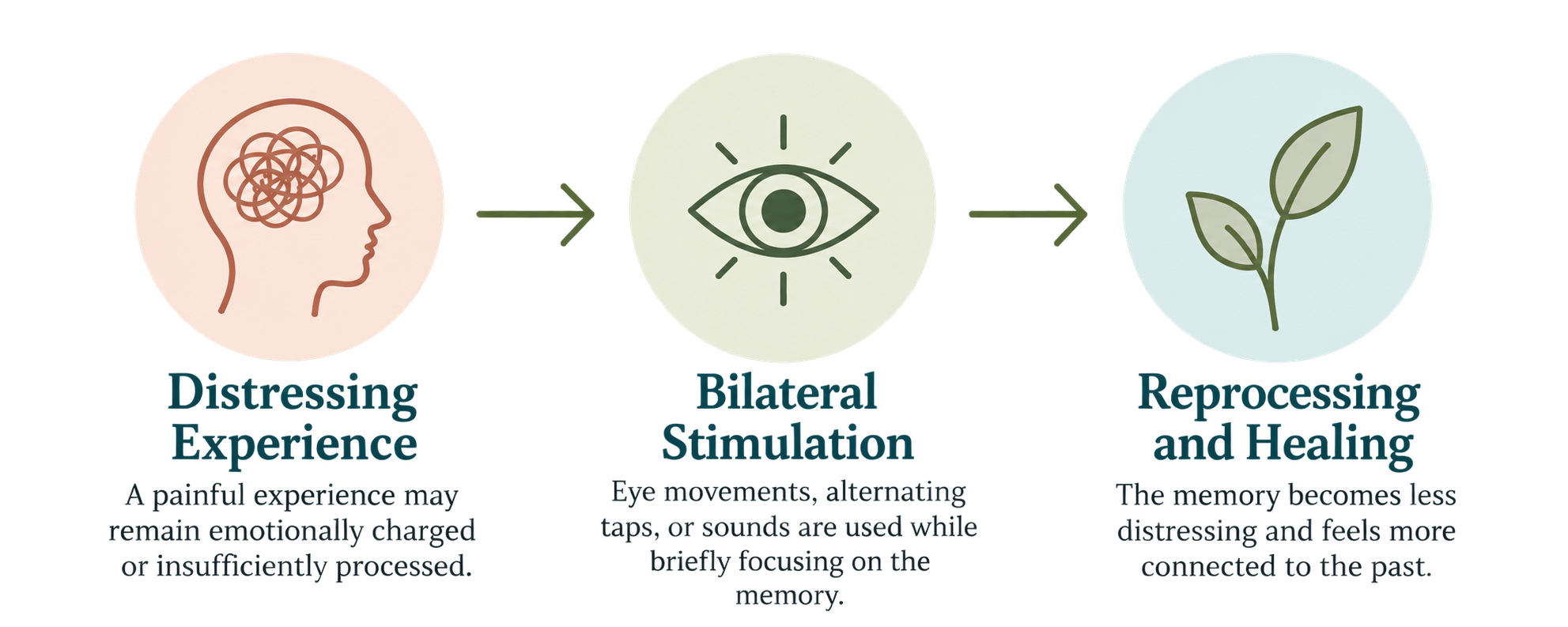
EMDR is based on the Adaptive Information Processing (AIP) model, which suggests that overwhelming or distressing experiences may not always be fully processed. When this happens, memories can remain “stuck,” continuing to influence your thoughts, emotions, beliefs, and reactions in the present.
During EMDR, you briefly focus on aspects of a distressing memory while engaging in bilateral stimulation, such as guided eye movements, alternating taps, or sounds. This process can help the brain reprocess the experience so that the memory becomes less distressing and feels more connected to the past rather than the present.
The memory isn’t erased or forgotten. Instead, the goal is for you to be able to remember what happened without experiencing the same level of emotional intensity or feeling as though it is still happening now.
What EMDR Can Help With
Trauma & PTSD/CPTSD
Anxiety, Panic & Persistent Fears
Distressing Memories & Past Experiences
Childhood & Family-of-Origin Experiences
Shame, Guilt & Self-Blame

Low Self-Worth & “Not Good Enough” Beliefs
People-Pleasing & Difficulty Setting Boundaries
Relationship & Attachment Wound
OCD-Related Fears and Triggers
Experiences That Keep You Feeling Stuck
EMDR may also be integrated with other evidence-based approaches when past experiences or distressing memories contribute to current symptoms.
What EMDR Therapy Looks Like With Me

EMDR is tailored to your individual experiences, needs, and comfort level. We will take time to build a foundation for the work and move at a pace that feels manageable for you.
• Building safety, coping, and stabilization skills
• Identifying the experiences and beliefs contributing to current difficulties
• Preparing for EMDR reprocessing at a pace that feels right for you
• Reprocessing distressing memories and strengthening more adaptive beliefs
• Integrating new insights and practical tools into everyday life